Before someone types a word into Google, something has already happened.
A pause.
A worry.
A curiosity.
A quiet “I need help.”

Search engines don’t capture thoughts—they capture moments. And every search query is a tiny window into what a person is feeling, fearing, hoping for, or trying to figure out in real time.
Search intent isn’t just about keywords or rankings.
It’s about human psychology.
When you understand why people search—not just what they type—you stop creating content that merely ranks and start creating content that connects.
Google Is Where People Go When They Don’t Know What to Do
People don’t Google because life is going great.
They Google when:
- Something feels uncertain
- A decision feels heavy
- A problem feels urgent
- A thought feels unsafe to say out loud
Google is where people whisper their doubts.
“How serious is this?”
“Am I doing this wrong?”
“Is there a better way?”
“Am I alone in this?”
Every search is a small emotional release. And content that recognizes this doesn’t feel like content—it feels like help.
The Emotional State Behind the Search

People rarely search in a neutral emotional state.
Short, abrupt queries often signal anxiety or urgency:
- “Sharp pain chest”
- “Missed deadline what now”
- “Toddler won’t sleep”
Longer, more conversational searches usually signal reflection or vulnerability:
- “Why do I feel overwhelmed all the time?”
- “How do I talk to my boss about burnout?”
Emotion shapes:
- How fast people skim
- How patient they are
- How skeptical they feel
- How much reassurance they need
This is why tone matters as much as accuracy. The right information delivered in the wrong emotional voice gets ignored.
People don’t want to be talked at.
They want to be understood first.
Context Changes Everything
The same search phrase can mean entirely different things depending on context.
A parent Googling “fever at night” at 2 a.m. is not casually browsing.
A professional Googling “best CRM tools” during work hours is not emotionally fragile.
Context includes:
- Time of day
- Device used
- Location
- Life stage
- Pressure level
Mobile searches tend to be more personal.
Late-night searches tend to be more emotional.
Desktop searches tend to be more strategic.
Great content adapts to the moment the reader is in—not just the topic they searched.
What People Are Really Hoping to Find
Here’s the uncomfortable truth:
People don’t always want facts.
They want relief.
They want:
- Permission to stop worrying
- Confirmation they’re not failing
- Reassurance they’re making the right choice
- Language for something they can’t articulate
This explains why people scroll past perfectly good answers.
They’re not searching for data.
They’re searching for something that feels safe to believe.
The Classic Intent Categories—Reimagined Through Psychology
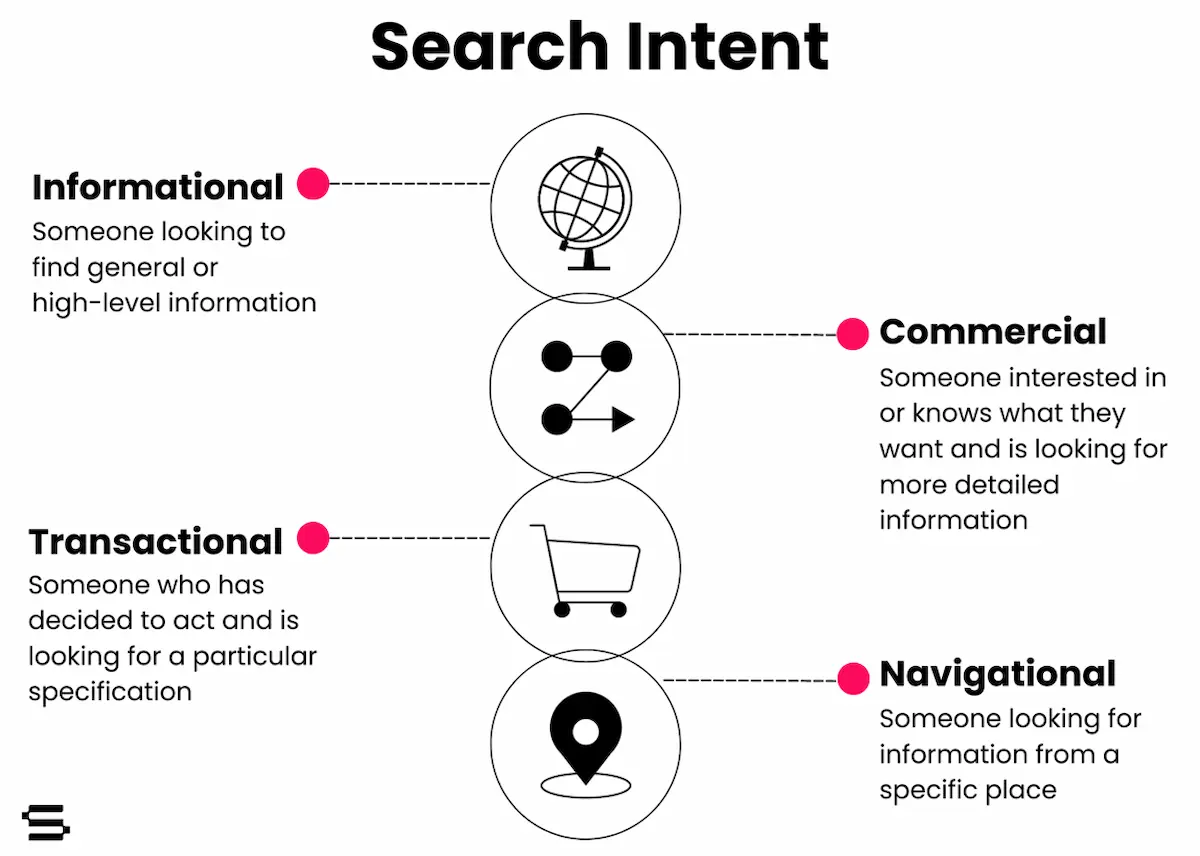
Traditional SEO talks about three types of intent:
- Informational
- Navigational
- Transactional
But psychologically, these map to something deeper.
Informational intent is often rooted in uncertainty
Navigational intent is rooted in familiarity or trust
Transactional intent is rooted in readiness and confidence
People don’t buy when they’re confused.
They buy when they feel safe.
If content jumps to selling before confidence forms, readers instinctively pull back.
Why “The Best Result” Isn’t Always the One People Click
Search engines rank relevance.
Humans rank resonance.
A technically perfect article can lose to a warmer, less polished one because people ask different questions than algorithms do.
They ask:
- Does this sound like someone who gets me?
- Does this feel honest?
- Is this written for humans—or metrics?
- Do I trust this voice?
Trust is emotional before it’s logical.
When content feels cold, generic, or sales-driven, people sense it immediately—even if they can’t explain why.
Search Intent Is a Journey, Not a Moment
Search behavior evolves as confidence grows.
People usually move through stages:
- Something feels wrong
- I need to understand this
- I want to compare options
- I think I’m ready to decide
- I want reassurance I chose well
Each stage needs a different type of content.
If you push action too early, you trigger resistance.
If you stay purely educational too long, you lose momentum.
The most effective content quietly guides readers to the next step—without forcing it.
Why Click-Bait Works (and Why It Breaks Trust)

Click-bait works because it exploits emotion—fear, curiosity, urgency.
But when the promise doesn’t match the delivery, something breaks.
The reader may click—but they won’t come back.
Modern audiences are highly pattern-aware. They recognize manipulation faster than we think.
Long-term trust is built not by being louder, but by being truer.
Writing for Search Intent Is an Act of Empathy
Intent-driven writing says:
“I see where you are.”
“I won’t rush you.”
“I won’t scare you into clicking.”
“I’ll give you what you actually need.”
That empathy shows up in:
- Clear structure
- Calm explanations
- Human language
- Honest limitations
- Respectful pacing
Ironically, content that tries less to “convert” often converts more—because people feel in control.
Trust Is the Hidden Currency of SEO
Algorithms change.
Psychology doesn’t.
Content that understands intent:
- Keeps people reading
- Encourages return visits
- Builds brand credibility
- Earns recommendations
- Compounds authority quietly
You stop chasing attention.
You start earning it.
Final Thought: Every Search Is a Small Act of Hope
When someone searches, they believe—on some level—that clarity exists.
That somewhere, someone took the time to explain.
To guide.
To reassure.
When you write with search intent psychology in mind, you’re not just optimizing content.
You’re meeting people at a moment when they’re open.
And that’s not just good SEO.
That’s good human work.
 GIML PUBLISHING
Leave a comment